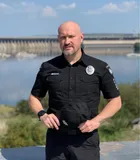
Eyewitness Name:
Артем Кисько
Deputy Chief of the Main Directorate of the National Police in Donetsk region, 2015–2022
«Our guiding principle was simple: stay safe, survive, and do what we could to help others»
Eyewitness Name:
Артем Кисько
Deputy Chief of the Main Directorate of the National Police in Donetsk region, 2015–2022
He immediately organized city patrols. Together with other police officers, he managed to clear the road to Mangush and evacuate from occupied Mariupol as a civilian
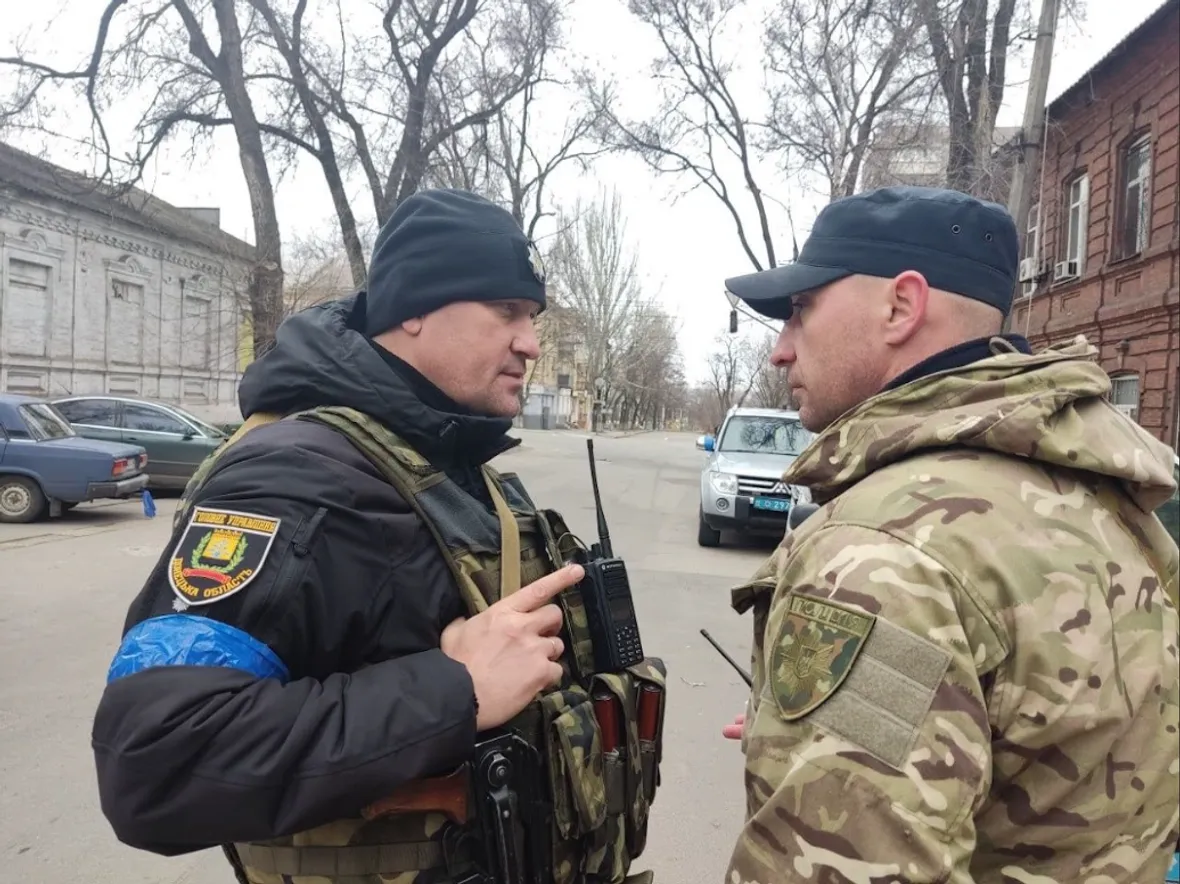
On February 24, 2022, when enemy forces approached Mariupol, the city leadership decided to relocate the police administration to Pokrovsk. We evacuated weapons and equipment. Volunteers and staff from various departments were organized into two combined units: one was assigned to operate directly in Mariupol, and the other to evacuate people from Volnovakha. I led the unit that stayed in Mariupol.
Roman Tkachenko, then head of the Mariupol District Police, said, “We have talked so much about patriotism; now it’s time to prove it with our actions.” On February 27, our unit returned to the city in full. In just one day of our absence, Mariupol had changed dramatically – almost all civilians had disappeared from the streets, leaving only cars and people in uniform. Each day, the situation became increasingly tense.
Captured DPR fighters
We immediately introduced patrols and began securing key sites. To maintain coordination, police officers were deployed to Azovstal and the Illich Steel Plant, where the 36th Brigade was based. We ourselves were stationed in a basement barracks, and officers across district stations were also working out of basements.
Every day, we reported for duty. Everyone had their role – patrolling the streets, informing residents, coordinating with the military. When fighting broke out on the Left Bank, KORD units operated in close coordination with Azov fighters.
At one point, Russian forces occupied two apartment buildings. Our KORD unit surrounded one of them and captured 13 DPR and Russian fighters. It gave us a real morale boost. I remember the KORD commander rushing in with photos – everyone instantly came back to life. We cleared the building, although we did lose one van in the process.
Uncontrolled looting
There was no real crime as such. Looting, yes – but it was chaotic and uncontrolled. At times, we even opened shops ourselves so people could take what they needed, because the food would have spoiled anyway. Taking food wasn’t an issue – alcohol, however, we poured out.
I remember one case. A woman came to me – the mother of my son’s classmate. She said, “I know our sons went to school together. Mine got scared during the shelling and ran off somewhere. He said he wanted to walk to Pokrovsk, to his father. He’s been gone for two days.” I could see she was on the verge of a breakdown.
We searched for him for three or four days. Patrols shared his description over the radio. But deep down, we understood he had most likely left the city – his mind just couldn’t take it anymore.
If someone caused trouble while drunk, we detained them, talked it through, and then released them after some time – once they had calmed down, they went back home.
For the first time, we felt genuine gratitude
Every day, investigators went out to document the shelling – filming the aftermath, compiling reports after each strike. They kept doing this until the very end, sending the materials to government-controlled territory.
It’s worth noting that police officers don’t often hear words of gratitude. Old stereotypes tend to get in the way. But in Mariupol, we experienced something different – for perhaps the first time, we felt genuine appreciation from civilians.
It moved the officers deeply and, naturally, made them want to do even more. It became a source of motivation, an extra reserve of strength. Despite the constant shelling, they kept going out again and again – getting a bit of rest, and then heading back on duty.
Communication enabled coordinated action
While there was still signal, my phone never stopped ringing. The internet held up almost until the very end because we had two repeaters—one at the Donetsk Regional Police Headquarters and another at the Patrol Police. The tallest building near the City Council hosted these repeaters. Later, all radios – police, emergency services, ambulances, city authorities, Azov, and other military units switched to them.
This allowed everyone on the network to know where strikes were happening and respond immediately. The stations had to be reprogrammed when the signal went out, but they kept everyone connected. Thanks to this, coordination remained possible: ambulances and emergency services could be deployed quickly, reporting casualties and assessing the situation on the ground in real time.
Information was the scarcest resource
At Azovstal, we put together a “battle bulletin” to share news, since people had been completely cut off from information. We took on the printing and distribution ourselves. It was through this bulletin that residents learned that Volnovakha and Mariupol had been awarded the status of Hero Cities. To get the news, up to a hundred people would gather in the streets. Everyone wanted to know what was happening, as there were no other updates. People waited in line for water or food, but when a police officer stood up to read, everyone listened intently, forgetting everything else. Good news lifted spirits and gave hope. I personally shared one report: “Our guys are holding strong, and the enemy has been pushed back from Kyiv.” At that moment, even water seemed unimportant, and nearby shelling didn’t feel as terrifying. When I told people to disperse, they begged me to finish reading.
On the day the airstrike hit Maternity Hospital No. 3, we met journalists from the Associated Press, who later produced the film 20 Days in Mariupol. From that moment, we maintained close contact. They could recharge and get a bite to eat at our place. Through us, they transmitted footage to their editorial office so the world could see what was happening. This was crucial, as there were no other reporters this determined in the city. Day after day, the world saw Mariupol’s horrors – filmed in daylight, edited and sent out in the evenings and nights.
After we got to know them, the journalists operated under police escort. They were the first to spot enemy tanks and, together with one of our officers, became trapped in a hospital. I feared they had been killed. I had already said my mental goodbyes to my colleague who was with them, since his radio went silent. But within a day, our reconnaissance team reached them and freed them. Working with Azov, the team carried out a small operation to extract the journalists and our police officers from the hospital. Unfortunately, a patrol officer was killed during that rescue.
Patriotism is not inherited – it is cultivated. It must be instilled from childhood so it burns in hearts and minds. Victory begins with conviction, both in the ring and on the battlefield. This is what we must remember and pass on to ourselves, our children, and those around us to achieve success.
Opening Manguș for civilian evacuations
We also had a team assigned to guard the buses. At the bus depot, there were buses designated for evacuation, as there were days when talks of a “green corridor” were circulating. A humanitarian convoy was organized, but the Russians didn’t allow it through.
One day, we went to check the checkpoint at Manguș. We planned to evacuate people through Manguș, but concrete blocks at the checkpoint needed to be moved. It was difficult because the roadside was mined and under Russian fire. Still, we set to work dismantling the blocks. The Russians opened fire on us, and we barely managed to escape. The next day, the mines were cleared from the road, the blocks moved as best we could, and people started leaving slowly… one car, then another, then a third. There were a few brave first-movers, and the humanitarian corridor began. Some people died in the cars, but others started getting out.
Where the buses had been, my team said it was too dangerous to raise their heads – the front had reached the nearby houses, and Russians were visible just 200 meters away. All the buses were damaged, nothing left to guard, so we drained the fuel and withdrew. The enemy then entered those neighborhoods.
A wedding under fire
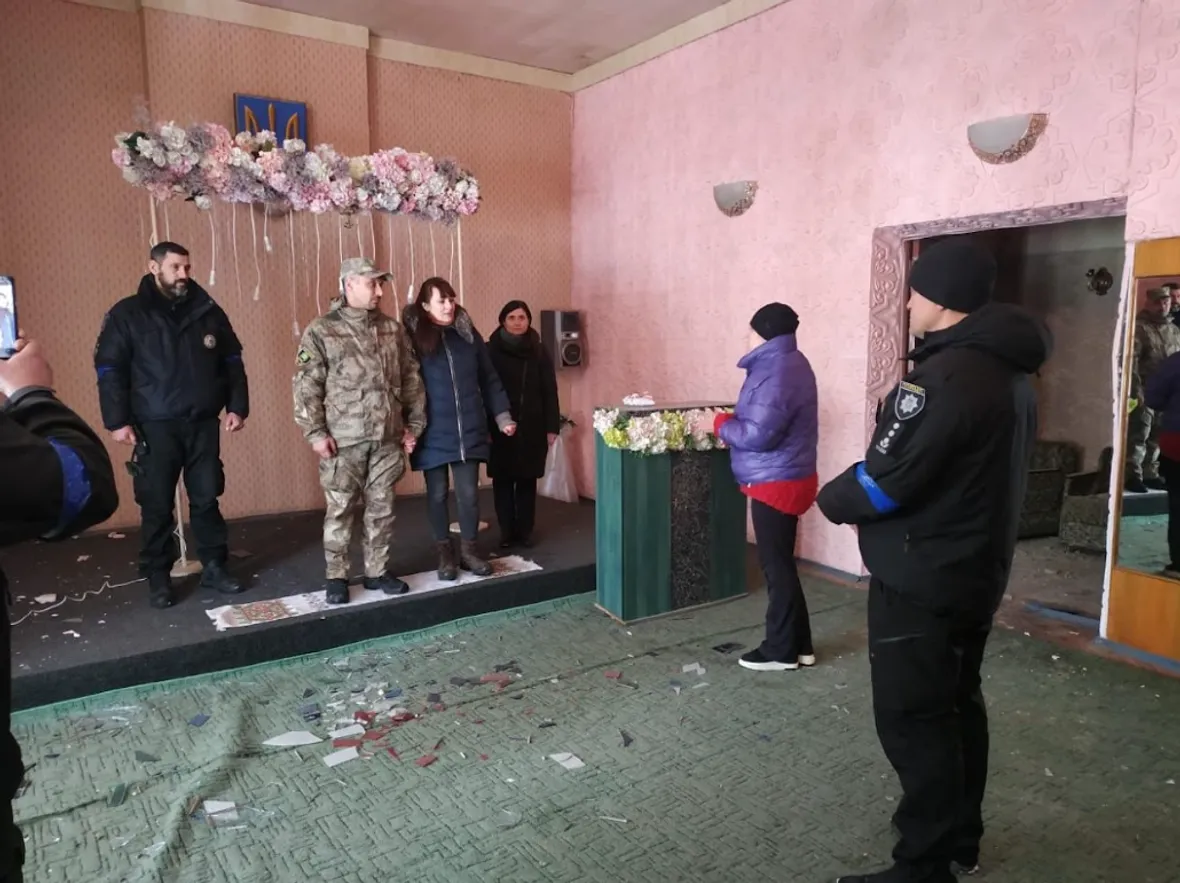
There was a mixed group of civilians, mostly veterans of Ukraine’s Ministry of Internal Affairs, who joined our unit. We armed them and formally integrated them into our operations. One of them, Andriy Kovalenko, decided that in the midst of the chaos – when the threat of death was constant – he wanted to legally marry his civilian wife, Maryna. They asked me, as the senior police officer in Mariupol, to officiate the ceremony.
Together with some colleagues, we went to the central civil registry office, which had already been damaged and had no windows. Inside the hall, we issued Decree No. 1 under my signature, legally recognizing them as husband and wife. It was a deeply sincere and unforgettable moment.
Incidentally, Maryna, a doctor, had treated me when I was critically ill with pneumonia. We managed to find IV drips, and she personally held and administered them, ultimately saving my life.
They went to fetch water… and died
Everything was escalating. At first, airstrikes came once or twice a day, then every twenty minutes. Later, naval artillery was added. This was part of the Russian strategy to capture cities – they would level a building, then move on while smoke and chaos spread. We tried to plan, block streets, dig positions, but they simply destroyed the buildings where civilians were hiding.
The hardest part was accepting the reality. For example, when you see bodies lying next to water containers, you realize these people went to fetch water – and now an entire family is dead. I saw many such casualties. Previously, most of the bodies I encountered were soldiers or police officers, but here there were graves in yards, on playgrounds, everywhere.
It was terrifying: every yard seemed like a grave, or someone would be dragging a body on a cart or sled. Identification of the deceased was done as best as possible through witnesses, neighbors, and relatives. DNA testing or proper forensic methods were impossible. Names were recorded and sent to Pokrovsk for official records.
Remembering everyone
Among our team, there were both wounded and killed. On March 10, a patrol crew went missing on the Left Bank. Officer Maksym Ivliev from the Special Purpose Police Battalion (BPOP) was shot in the leg. Captain of Police and senior officer of the Strategic Investigations Department (SID) Vasyl Kazaryn suffered a severe injury. On March 12, Artem Halkevych, an instructor at our law institute, was killed. On March 14, investigator Iryna Horyaha was injured, and on the same day, her husband and son were killed. Deputy head of the SID in Donetsk region, Police Major Vitalii Ksenofontov, was wounded the same day while delivering humanitarian aid. Later, Kostia Telipailo, “Kasper,” a lieutenant from the Special Assault Unit (KORD), was killed at the port. Another special forces officer was killed at “Azovstal.” I do not have the total number of fallen police officers.
Risky evacuation
On March 15, when it was no longer possible to carry out regular police duties in the city, and with approval from the leadership of the National Police of Ukraine and regional authorities, I gathered the personnel and informed them that we needed to leave the encirclement while there were still any exit routes available. By that time, except for the Prymorskyi district and “Azovstal,” the entire city was already occupied. This marked the beginning of our evacuation.
For the police officers, the risk was that most of them were already wanted by the so-called “DPR,” as in 2014 they had left occupied cities such as Horlivka, Makiivka, Donetsk, and others. At 5 a.m., I assembled the unit, told them to come up with cover stories, find civilian clothes, and attempt to leave in car columns.
During the withdrawal, various situations occurred at checkpoints, including thorough inspections. Some were captured, some took a long time to get through Russian-controlled areas, and some were wounded or concussed. About a dozen police officers remained at “Azovstal.”
Patriots are not born, they are made
It’s important for people to understand the baseness and dishonor of their own nation. But right now, the focus isn’t on them or punishment – I hope it doesn’t escape accountability – but on ourselves.
It’s clear we won’t reach Moscow or capture it, yet discrediting them worldwide so they become “untouchable” forever is possible. For Ukraine, that should be a goal, a measure of our combat capability, unity, and responsibility.
People become patriots through conviction and action, not by birth. This must be instilled from childhood, so it burns in minds and hearts. Victory begins with belief – both in the ring and on the battlefield. We must remember this and pass it on to ourselves, our children, and our community to prevail.