Rinat Akhmetov Foundation Joins the “Mariupol Justice” Project
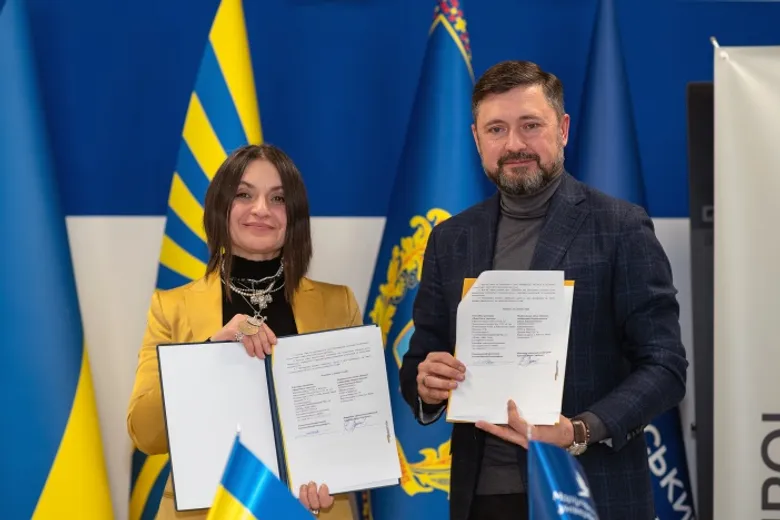
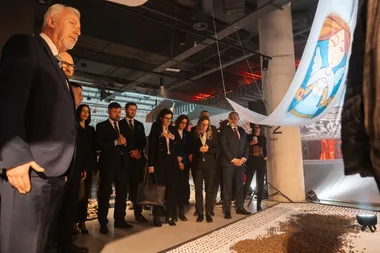
Yesterday, 16 February, the Mariupol City Military Administration and the Rinat Akhmetov Foundation officially launched their cooperation within the framework of the Mariupol Justice project at Mariupol State University. The relevant Memorandum was signed by Vadym Boichenko, Head of the Mariupol City Military Administration, and Natalia Yemchenko, Chair of the Foundation’s Supervisory Board.
As part of the partnership, the Rinat Akhmetov Foundation’s Museum “Voices of the Civilian Victims” will join the documentation of crimes committed in Mariupol. Since 2014, the Museum has been collecting testimonies of people affected by the war. The initiative will focus on preserving the historical truth about Mariupol through the collection and dissemination of civilian testimonies, the creation of the world’s largest archive of Mariupol residents’ stories, and the protection of victims’ right to truth and to be heard.
According to Vadym Boichenko, Mariupol is the first city to embark on this path of human rights advocacy, thereby shaping a roadmap for other affected communities across Ukraine. To strengthen these efforts, the partnership network is being expanded to help establish a legal precedent and ensure the protection of people’s rights.
“To stop Russian terror and ensure that those responsible are held accountable, unity and a firm stance from everyone are essential — at the international, national, and private levels alike. That is why we launched the human rights initiative Mariupol Justice: to document crimes, preserve the truth, and secure justice for the Mariupol community. A city that has become a symbol of tragedy must also become a symbol of restored justice. I am grateful that we are not alone on this path,” emphasized Vadym Boichenko, Head of the Mariupol City Military Administration.
According to Natalia Yemchenko, Chair of the Supervisory Board of the Rinat Akhmetov Foundation, the Foundation’s Museum “Voices of the Civilian Victims” has been recognized as the world’s largest collection of civilian testimonies about war. It currently contains more than 140,000 stories from civilians, including nearly 12,000 accounts from Mariupol residents.
“We will continue to collect these stories, consolidate them, and transfer them to the Mariupol Justice project. We will also implement initiatives that highlight the most resonant cases through artistic, creative, and cultural formats — including exhibitions, books, and other platforms. This is essential because truth must be made public. If it remains confined to archives or court files, it disappears from public discourse. We are aware that Russia is already making every possible effort to erase the truth about Mariupol,” said Natalia Yemchenko, Chair of the Supervisory Board of the Rinat Akhmetov Foundation.
Mariupol State University plays a key role in preserving the memory of the Mariupol tragedy and advancing the project’s international advocacy efforts. An office of the human rights platform has already been established on the university’s premises. It will work with international partners and safeguard testimonies documenting the events in the city.
“An advocacy office of Mariupol Justice has been opened at our university, as we regularly host numerous international delegations and continuously remind the world about the tragedy of Mariupol and the war in Ukraine,” said Tetiana Marena, Acting Rector of Mariupol State University.
The primary goal of the international human rights initiative Mariupol Justice is to document Russia’s crimes, secure international recognition of the Mariupol tragedy, and develop a legal mechanism to provide reparations to affected Mariupol residents using frozen Russian assets. The initiative has already received support from the Council of Europe Committee, the Office of the Prosecutor General of Ukraine, the Ministry of Foreign Affairs of Ukraine, and the Donetsk Regional State Administration, as well as from several European cities, including Wrocław, Gdańsk, Warsaw, and Brussels.